
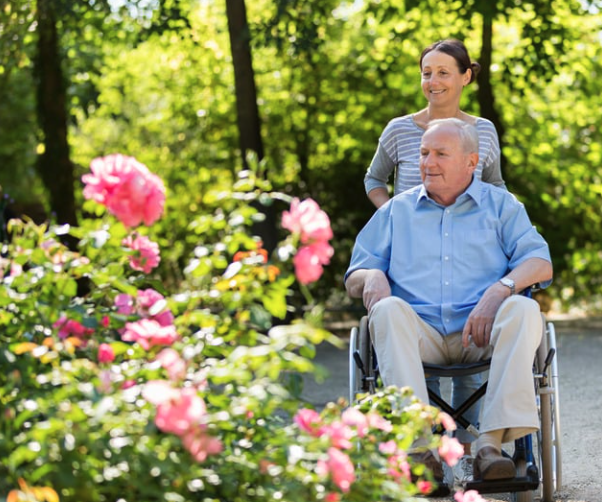
Our team is available to assist them with their medical and psychological needs. Contact us to find out about establishing individualized geriatric services with one of our providers!
At Sequoia, we are dedicated to providing care with our team of physicians, nurse practitioners, and nurses who offer dynamic and multifaceted approaches to patient care. We are dedicated to providing the best Sequoia health care which allows our team to be on-call for both patients’ and facilities’ needs. We coordinate our care with the geriatric facility or assisted living facility to provide each patient care that is tailored to their wants and needs.

Sequoia has providers throughout Wisconsin, dedicated to serving you. We work with your insurance, healthcare providers, & facility staff to coordinate services best for you & your journey.
Allows patients to receive medical assessments, treatments, & monitoring without needing to leave their assisted living facility, enhancing accessibility and promoting better overall health management.
Focuses on providing personalized support based on the unique needs, preferences, & cognitive abilities of each person with dementia. We work to enhance quality of life by tailoring their care plans to promote comfort, safety, & engagement. See the Sequoia Pathways page for details.
During a triage call, a nurse or other medical professional will: Identify the patient’s reason for calling, ask assessment questions, determine the level of care needed, offer advice and education, and document the call.
Coordinated healthcare provided to patients with two or more chronic conditions. It is designed to improve outcomes by managing patients’ conditions more effectively and helping them navigate their care. See our CCM page for details.
Healthcare providers are able to use digital devices to monitor patients’ health. Data collected is transmitted to the healthcare team for assessment and treatment plan coordinations. See our RPM page for details.
In person and telehealth available
24/7 provider available for questions.

Sequoia’s Remote Patient Monitoring (RPM) program gives your healthcare team another way to monitor important health and sleep trends between visits. Information collected by the device helps us recognize changes or patterns that may warrant additional assessment, follow-up, or communication with your care team.
The RPM device is a small, contactless monitor placed near the patient’s bed and plugged into a standard electrical outlet.
It is NOT a wearable.
There is no watch, finger sensor, patch, or other device that needs to be worn while sleeping.
The device passively monitors available overnight health and sleep trends, which may include:
For Sequoia’s RPM program, sleeping/overnight health trends are primarily reviewed as our source of truth. We are looking at patterns and changes over time rather than relying on one isolated reading.
No! Nothing is required of the patient.
There is no need to:
Simply sleep as you normally would while the device passively collects available information.
Monitoring trends over time can provide additional information for many different health conditions. Examples may include:
Changes in nighttime breathing or respiratory trends may provide additional information that prompts the care team to assess for a possible change in respiratory status.
Nighttime respiratory and sleep patterns may help identify trends that could warrant further evaluation or discussion with the healthcare provider.
Changes in resting heart-rate trends may provide useful information for patients with certain cardiac conditions and can help the care team recognize when additional assessment may be appropriate.
Sometimes the most helpful information is simply recognizing that a patient’s usual nighttime pattern has changed. RPM gives the care team longitudinal information to compare over time.
RPM does not diagnose these conditions on its own. Instead, it provides additional health information that the clinical team can use alongside symptoms, assessments, medical history, and regular medical care.

No. Participation is completely optional.
Patients and/or their responsible parties can choose whether they would like to participate. Declining RPM does not prevent a patient from continuing to receive their regular care through Sequoia.
RPM services are billed to the patient’s insurance.
Sequoia does not charge a separate program fee/copay for participation in RPM.
Individual insurance benefits and coverage may vary.
No. RPM is an additional tool for your healthcare team. It does not replace routine medical visits, nursing or facility assessments, communication with your care team, or emergency services.
The goal is simple: give your Sequoia care team more information about your health between visits so we can recognize meaningful trends and provide proactive, individualized care.
We are happy to answer questions about the device, monitoring process, insurance billing, or participation in the RPM program.

Chronic Care Management (CCM) refers to coordinated healthcare services provided to patients with two or more chronic conditions. It is designed to improve health outcomes by managing these conditions more effectively and helping patients navigate their care. These services are typically managed by a primary care provider, nurse, or care team.

Patients must have two or more chronic conditions expected to last at least 12 months (or until they pass), and these conditions must place them at significant risk of death, acute exacerbation/decompensation, or functional decline. Examples include: